
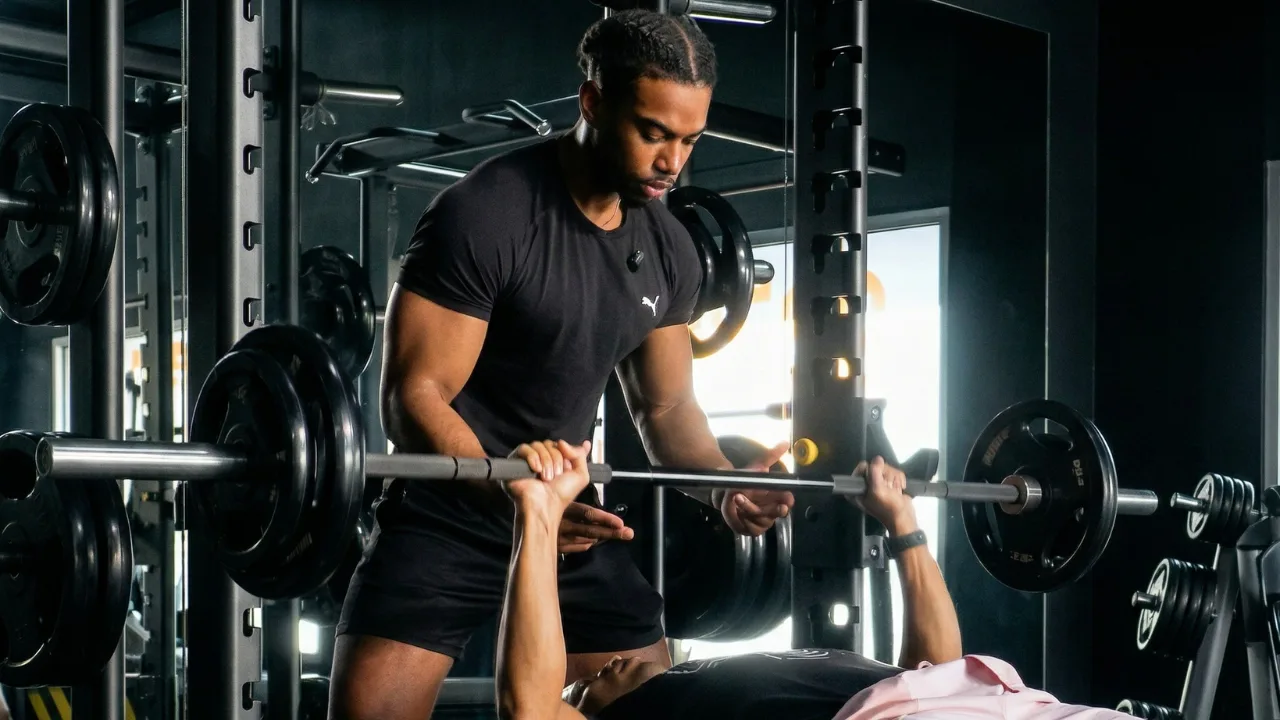
As a personal trainer in Barcelona, the single most common question I get from new clients goes something like this: should I focus on fat loss first, or jump straight into strength training? The honest answer is that it isn’t an either-or. Fat loss and strength training aren’t separate goals, and treating them that way is the reason most people end up stuck in the same cycle for years. When your training is structured properly, the two work together and the results hold up far beyond the first few months.
The cardio-only trap
Most people start with cardio. Running along the Barceloneta seafront, long cycling sessions on the weekend, treadmill work after the office, often paired with a calorie deficit that’s too aggressive to sustain. The scale drops at first, and it feels like progress. Then the energy starts wavering by mid-afternoon, the muscle tone softens, sleep gets patchy and the drops on the scale stall. Within a few months the weight creeps back, often with a little extra, and you’re starting over with less motivation than the first time.
The issue isn’t effort. The issue is that cardio alone doesn’t necessarily help rebuild the lean muscle your body gradually loses as you cut calories. Without that muscle, your resting metabolism slows, which means the calories your body burns daily routines edge downward. You end up with a body that’s lighter on the scale but weaker, less stable and harder to maintain.
What changes when you train for strength
Strength training changes the equation from the inside out. When you develop lean muscle through progressive resistance work, several things shift at once.
Your body supports a higher resting metabolism. Your posture improves as the muscles around your spine, shoulders and hips get stronger. Your joints feel more stable because the structures holding them in place are doing their job properly. The fat loss that follows is the kind that lasts, because it’s supported by a body that’s actually stronger, not just lighter.
There’s an emotional side too, and it’s often what keeps clients consistent long after the initial motivation fades. Stiff shoulders ease in the morning, your lower back stops flaring up by mid-afternoon and you feel lighter moving through a normal day. Walking up to your flat in Gràcia stops feeling like a workout in itself.
Progressive overload, the mechanism that makes it work
The word that does most of the work in strength training is progression. Your body adapts to whatever you ask for, and if you ask the same thing every week, it stops adapting. Progressive overload means gradually increasing the demand through slightly heavier loads, a few more reps, better control, harder variations or shorter rest between sets.
This is where most self-programmed training falls apart. People do the same three or four exercises for months, hit a plateau and assume their body doesn’t respond. In practice, the program stopped asking anything new around week six. Smart programming tracks what you did last week, adjusts what you do this week and keeps the body in a state of steady adaptation.
What a structured fat loss and strength program looks like
A well-structured program typically runs across two to four sessions per week, depending on your schedule and recovery capacity. Each session is built around compound movements, squats, hinges, presses, pulls and carries, because those deliver the most adaptation per unit of time.
Around those big movements, I layer in targeted work for the areas that matter most for you. That might be core stability if you sit through Zoom-heavy days, glutes and hip flexors if your lower back is giving you trouble or shoulder mobility if you’re coming back from a long period of inactivity.
Nutrition runs alongside the training, not as a separate crash-diet project. Most clients do well when they focus on macronutrient intake rather than chasing calorie totals alone, eat enough protein to support recovery and keep the deficit modest enough to sustain. Meal-timing matters less than people assume, total intake matters more.
Realistic timelines for fat loss and strength training
Everyone wants to know when they’ll see change. Honest answer, energy improvements can show up within two to three weeks, strength gains typically become apparent around week four to six and visible physical changes often emerge within three months. These aren’t guarantees, individual timelines vary based on starting point, sleep, stress and consistency, but for most clients training twice a week with sensible nutrition, this is the window.
The mistakes I see most often
When new clients arrive at Davephysik, a handful of patterns show up again and again. They train too often at too high an intensity with no plan for recovery, they chase novelty from session to session instead of repeating and progressing the same movements, they under-eat on training days and over-correct on rest days and they track weight obsessively while ignoring measurements, photos or how their clothes fit, which are often better signals of genuine body composition change.
Fixing these isn’t dramatic, it’s usually a matter of cutting session count, committing to a small set of exercises for six to eight weeks, eating more on training days and measuring progress with tools that actually reflect what’s changing.
How I coach at Davephysik
At Davephysik, I deliver structured 1-on-1 personal training and online coaching for English and Spanish speaking residents in Barcelona. Every program is built around technique, progressive programming and smart programming that adapts week by week, whether your focus is fat loss, strength or both. Real results that last, not quick-fix promises.
I train clients in private studios in Gràcia, L’Eixample and Caldes de Montbui, or online from anywhere. Sessions run in English or Spanish, and the person you meet on your first call is the person coaching you every session after that.
Frequently asked questions
How many training sessions a week do I need for fat loss and strength?
For most clients, two to three sessions per week is the range that delivers steady progress without running you down. One session a week can maintain what you’ve built, but it doesn’t typically drive much new adaptation. More than four sessions usually hits diminishing returns and compromises recovery.
Can I lose fat and build strength at the same time?
Yes, especially if you’re new to structured training or coming back after a long break. The closer you are to your genetic ceiling, the harder simultaneous progress becomes, but for most people the two goals support each other rather than competing.
How long before I see visible results?
Energy and general wellbeing often improve within two to three weeks. Strength gains typically show up around week four to six, measured in the loads you’re handling rather than just how you feel. Visible changes in how you look often emerge around the three-month mark, with meaningful body composition shifts by around six months of consistent training.
Do I need a gym membership, or can we train at your studio?
I train clients in private studios in Gràcia, L’Eixample and Caldes de Montbui, so there’s no gym membership required. For online clients, we build the program around whatever equipment you have, from a fully kitted home gym to a couple of dumbbells and resistance bands.
What if I’ve never done strength training before?
That’s the most common starting point. I coach every technique from scratch, and the first few weeks focus on movement quality rather than load. Most clients are lifting confidently within a month, with a technical base that keeps them safe as the weights go up.
Book a free video call
If you want to talk through your goals and see whether this approach fits where you are, the easiest next step is a free 30-minute video call. No commitment, just a conversation about what you’ve been training, what you want to change and whether we’re a fit.